
We’re bringing people back together

Our relationships shape our health. So do the places, opportunities and everyday experiences that bring us into contact with one another.
The Foundation for Social Health works across policy, research, partnerships and public campaigns to strengthen connection and belonging. We bring people and institutions together to build healthier, more connected communities.
Connection is prevention.

Why social health?
Social health is about the quality of our relationships, our sense of belonging and our opportunities to participate in community life. Alongside physical and mental health, it shapes how well we live.

Connection protects health
One-third of Australians feel lonely at least once a week, that’s 9 million people. Let that sink in for a second. This is the public health issue of our time and demands an urgent population-level response.

Belonging needs places
Loneliness increases the risk of early death by 26% and has the same negative health impact as smoking 15 cigarettes a day, with higher rates of depression, anxiety, heart disease, Type 2 diabetes and dementia.

Prevention starts in everyday life
We do not have enough money, doctors, psychologists, community workers or services to clinically treat our way out of this epidemic. Taxpayers spend $2.7 billion every year trying to meet demand instead of addressing need in the first place.
Solving this together
Changing the conversation
Changing the conversation
Changing the conversation
Loneliness is a crisis of connection, requiring a rethink of how our society facilitates relationships. It’s not a personal flaw that can be quick-fixed with therapy or ‘making new friends’. We’re shaping the national conversation and sharing stories that inspire action.
Through research, advocacy and public storytelling, we make the case for connection as a shared priority.

Bringing partners together
Bringing partners together
Bringing partners together
Our Third Spaces Network brings this work into everyday gathering places, helping partners share ideas, resources and learning.
If you’re interested in addressing loneliness, then you have a place in our movement. It doesn’t matter if you’re a politician, business owner, local community group or healthcare service. We’re building a broad coalition to break down traditional silos and collaborate on real solutions.

Testing ideas and building evidence
Testing ideas and building evidence
Testing ideas and building evidence
Our focus is on approaches that strengthen participation, reciprocity and durable relationships—and can be adapted by other communities.
We need to focus on evidence-based strategies that have been shown to effectively reconnect communities and enhance mental well-being. By identifying successful programs, we can scale them up to reach more people and create lasting change.

Our Work
Third Spaces Network
Third spaces are the places we gather beyond home and work. They are where a familiar face becomes a friend, neighbours exchange help and people find a place in community life.
Our Third Spaces Network brings together organisations and businesses working to strengthen these everyday connections. Through shared projects, research and collaboration, we explore how existing places and resources can create greater public value.
Social health in practice
At Villaggio Sant’Antonio in Canberra, we are working with partners to explore aged-care communities as places of connection across generations and neighbourhoods.
The Little Italy Village Café is the first demonstration site for the Third Spaces Network: a place to gather, participate and build relationships, with learning that can inform work elsewhere.
Policy and research
We work to make social health a priority in public policy, funding and institutional decision-making.
Our work connects practical community experience with research, helping decision-makers understand how investment in social connection can support wellbeing and prevention.
Who We Are
A foundation for a more connected Australia
The Foundation for Social Health was founded by Melanie Wilde to strengthen the relationships and social conditions that support health.
We bring together expertise across public policy, research, community development and communications, alongside the knowledge of people and organisations creating connection every day.
Our approach combines national advocacy with local action: bringing partners together, testing ideas in real settings and building the evidence for lasting change.
Our People
We’re a group of experts and specialists committed to building a more connected Australia. And we’re always on the look-out for new partnerships and people to collaborate with—so reach out and connect if you have ideas on how we can work together.

Melanie founded the Foundation for Social Health to advance a practical, population-wide approach to connection and belonging. Her background spans law, public policy and community-sector leadership. She is an Anne Wexler–Fulbright Scholar and holds a Master of Public Administration from New York University and degrees in Arts and Law from the Australian National University.
We’re a group of experts and specialists committed to building a more connected Australia. And we’re always on the look-out for new partnerships and people to collaborate with—so reach out and connect if you have ideas on how we can work together.

Giulia Jones is a community-sector leader and former ACT Shadow Minister for Health whose parliamentary career ignited a passion for the people and institutions at the heart of care.
She has since led peak bodies and not-for-profit organisations spanning chronic pain, mental health and aged care, and currently serves as CEO of Villaggio Sant’Antonio, an established Canberra aged-care provider. Giulia brings political insight, executive experience and a clear ambition: to build care around dignity, relationships and belonging.
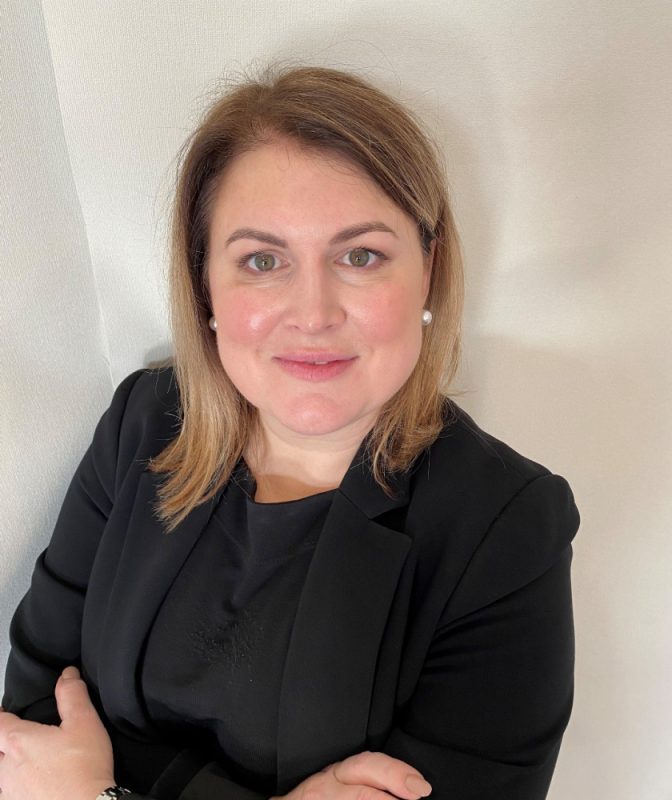
Danielle Young is a senior public policy leader whose career spans senior staffing roles in federal and ACT politics, leadership roles at Big Four consulting firms, and complex reform across national security and defence. She brings strategic judgement, deep policy expertise and experience leading change at the intersection of government, industry and community.
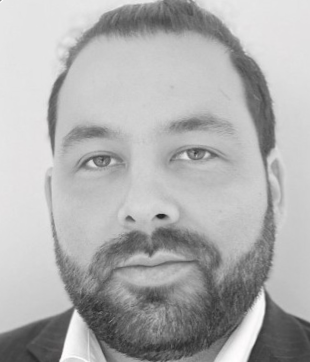
Solly brings to theteam executive experience in the NFP sector and significant expertise as amanagement and strategy consultant. He also has nearly a decade working in thehighest levels of politics and government.
As a consultant, Solly has worked with many organisations tohelp define and deliver on their ambitions in the sustainability and socialimpact space – ensuring measurable, authentic and lasting change.
Solly holds an Masters of Business Administration (MBA) fromMelbourne Business School, as well as Bachelor’s and Master’s Degrees inInternational Relations from the ANU. Solly was awarded the Dean’s Letter ofCommendation for Consulting for Social Impact during his MBA studies.
Our Board is growing, and we'll announce new directors later in 2026.
Our community
The Foundation for Social Health was born from a simple but urgent idea: that rebuilding human connection is not just nice to have — it’s vital. Social health is the missing piece in Australia’s approach to mental and physical health. From loneliness to chronic illness, the evidence is clear: connection is prevention.
This movement is powered by people. We are deeply grateful to the individuals and organisations who have offered their generous insight, support, time and encouragement in these early days as we work to elevate social health as a national priority.
Individuals
- Kos Samaras
Director, RedBridge Group - Dr Rebecca Huntley
Researcher, Author, and Social Trends Analyst - Professor Stuart Kinner
Head, Justice Health Group; Murdoch Children’s Research Institute - The Hon. Rebecca Vassarotti, former MLA
ACT Minister for the Environment and Heritage - Solly Fahiz
Director, Atlas Council - Nick Tebbey
National Executive Officer, Relationships Australia; Member, National Family Law Council; Chair, Ending Loneliness Together - Professor Patrick McGorry AO
Executive Director, Orygen - Professor Ian Hickie AM
Co-Director, Brain and Mind Centre - Dr Sebastian Rosenberg
Fellow, Brain and Mind Centre - Dr Pramudie Gunaratne
Psychiatry Registrar and Advocate - David Faktor
Principal, Faktor Advisory - Stuart O’Neill
Founder, The Mental Health Pub - Glenys Reid
CEO, Chatty Café Australia - Milly Rose Bannister
Founder, ALLKND - Michael Claessons
Chief Executive Officer (CEO) of Project Independence - Gemma O’Loughlin
Canberra Health Services - Dr Vanessa Picker
Social Impact Evaluator and Strategic Adviser - Lockie Cooke
Founder and CEO, Indigenous Communities Education and Awareness (ICEA) Foundation - Nicholas Carlton
Founder & CEO - Spoony - Naomi Murphy
Indigenous Mentor for the Waalitj Foundation of Central Queensland and Chairperson of Woor-Dungin in Victoria - Qin Qin
Author Model Minority Gone Rogue, mental health influencer and advocate, director of the ACT Literary Festival - James Goodwin
CEO, Accommodation Australia and Chair, St John’s Ambulance - The Hon. Andrew Leigh MP
Minister for Competition, Charities and Treasury and Assistant Minister for Employment, economist and author of Disconnected, and Reconnected: A community-builder’s handbook - Senator the Hon Anne Ruston
Deputy Leader of the Opposition in the Senate and Shadow Minister for Health and Aged Care - The Honourable Emma McBride MP
Assistant Minister for Mental Health and Suicide Prevention and Assistant Minister for Rural and Regional Health - Mr Andrew Barr MLA
Chief Minister of the Australian Capital Territory - Zoe Daniel MP
Independent Member for Goldstein
Organisations


International Collaborators


Get Involved
Help build a more connected Australia
Connection grows through the contributions of many people and places.
We welcome conversations with community organisations, businesses, researchers, governments and funders interested in strengthening social health.
Whether you have a place, an idea, expertise or resources to contribute, we’d like to hear from you.
Contact us
Interested in our work, a partnership or an opportunity to contribute? Get in touch.
There’s no question too complex, query too big or small. We’d love to hear from you.
